Please be advised, beginning Monday, May 4, 2026, the front entrance of the Municipal Office at 1 Church Street, Truro, will be closed for renovations to improve building accessibility. This work is expected to continue until mid-summer. During this time, all visitors are asked to use the rear entrance of the building, off the parking lot.

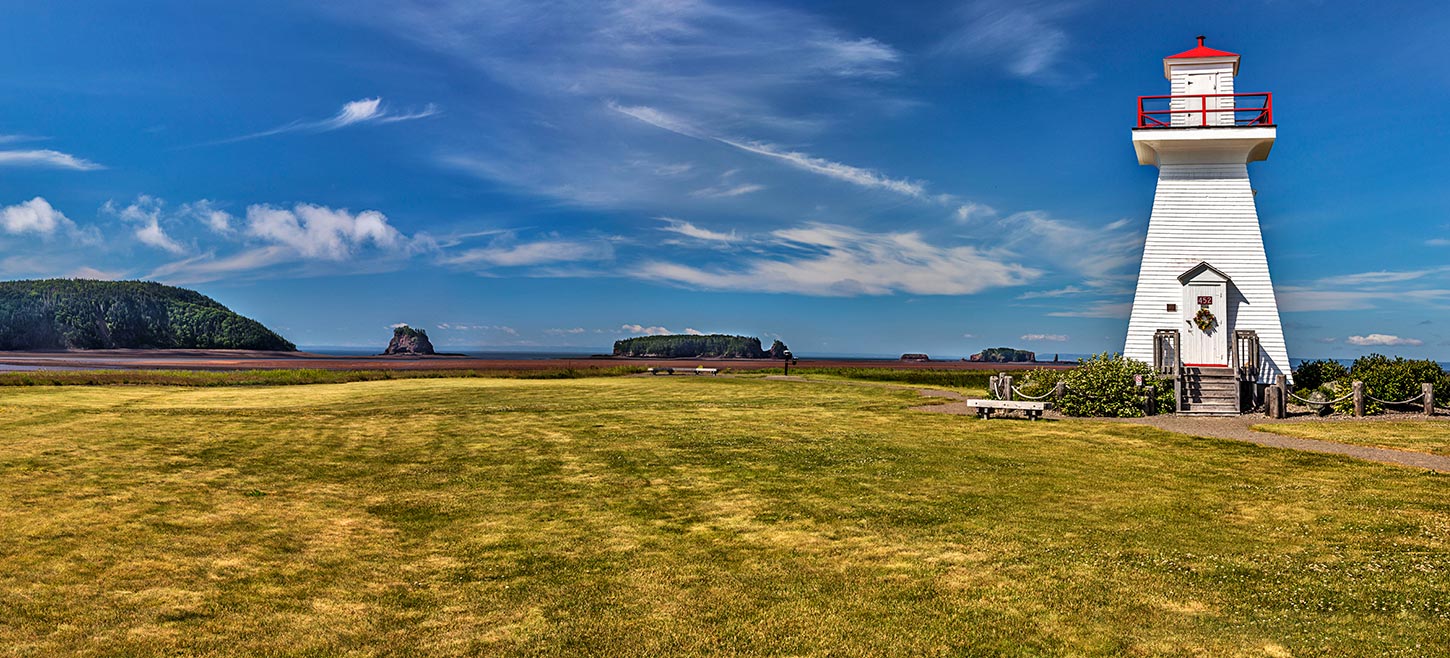

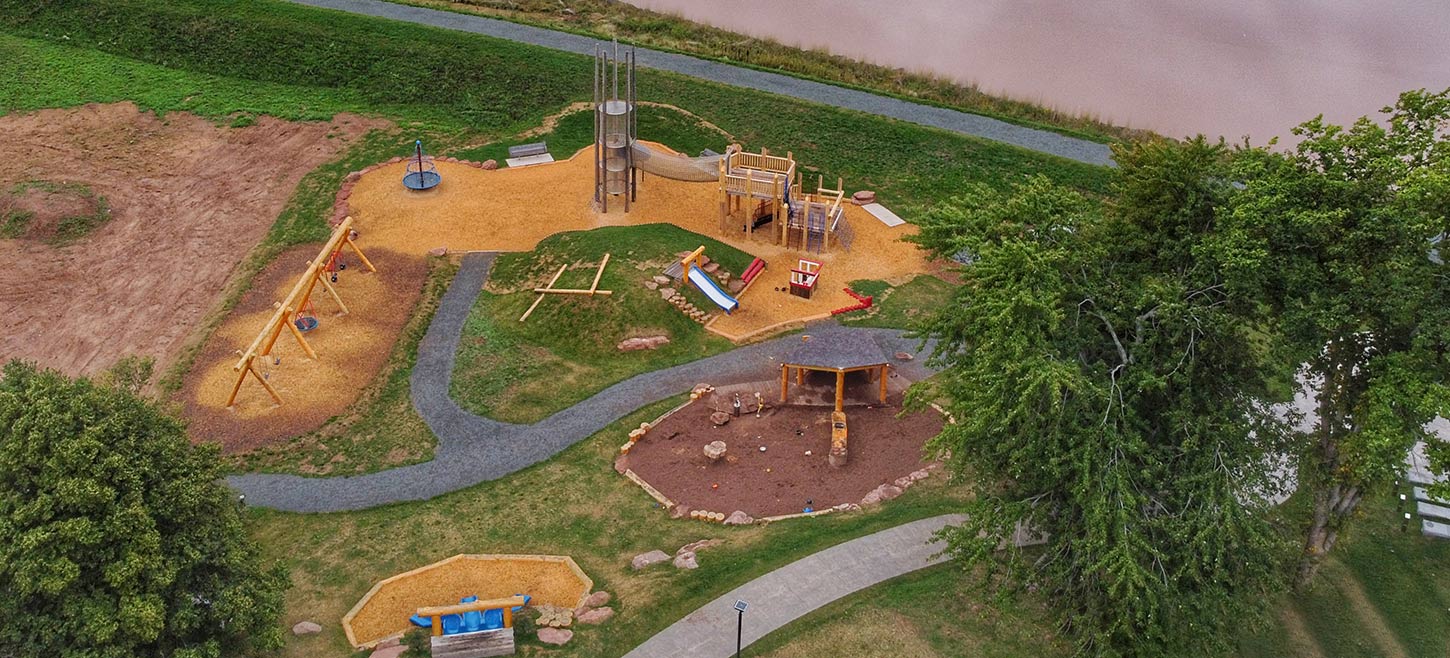



Lawrence R Nicoll - Photographer


Moslem Cemetery
533 Pictou Road, Valley
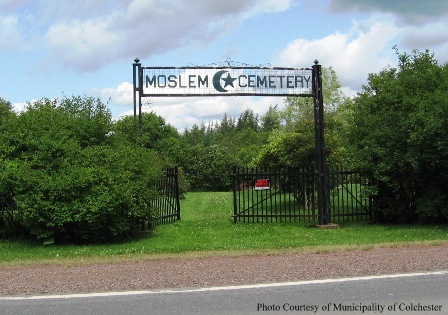 The Moslem
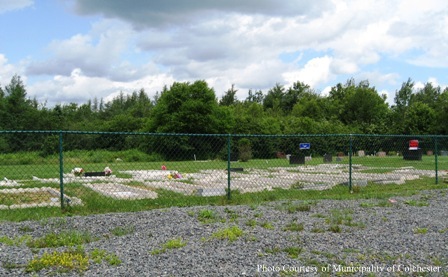 Cemetery is the first Islamic cemetery in North America. It is a small Syrian Muslim cemetery located on Pictou Road, Valley, along with a mosque. Established in May 1944, the cemetery was owned and maintained by the Muslim settlers who had immigrated from Syria/Lebanon and settled around the Truro/New Glasgow/Pictou area in the early part of the twentieth century.
The Islamic Association of Maritime Provinces of Canada continue to maintain this Cemetery and small Mosque.
Dominion Chair Company General Store
5637 Highway 2, Bass River
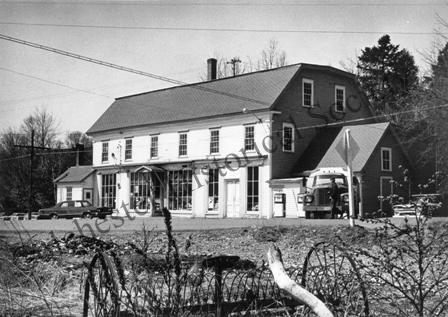
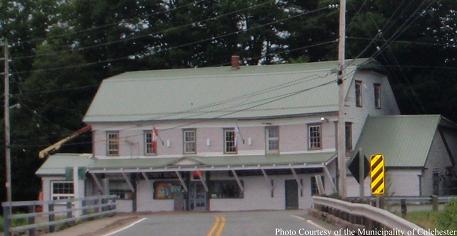 The Dominion Chair Company was first built in 1860 and run by the Fulton brothers, George and William. The company took the name “Dominion Chair Company Limited” in 1903. The factory had a total of six fires between 1860 and 1989, after the sixth fire in 1989 the factory was not rebuilt. The Dominion Chair Company General Store, built in 1890, still stands today and continues to be used as a store.
Bass River Lighthouse (Saints’ Rest Lighthouse)
329 Wharf Road, Bass River
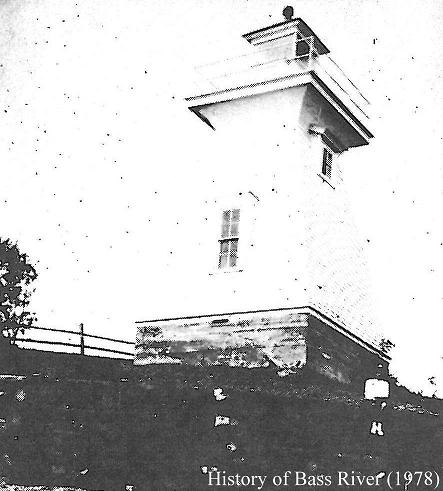 This lighthouse overlooks Cobequid Bay, on the point of the
 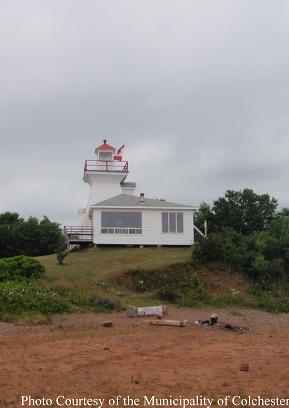 western side of the entrance to the Bass River. It was built and lit in 1907 by Samuel Beckwith. Shipbuilding also took place at this locale.The lighthouse is a white tapered square wood tower. It was deactivated in 1992 and is one of two remaining lighthouses in Colchester County. It went into private ownership in 1994 from the Crown.
Heritage registration is a formalized way of recognizing and protecting the heritage value of historically significant properties. A building’s architecture, its location, its spatial configurations, and the ways it contributes to its surrounding landscape, can serve as evidence of a community’s collective past; physical reminders of where a group of people have come from, who they are and why their society is the way it is. Through the preservation of such properties, we can experience a substantial part of a place's history and have a way of connecting with those that came before us. More than just historic homes and churches, built heritage represents a rich assortment of structures and places that help define a community's shared history. The Province offers a heritage designation program within Nova Scotia.
Further information on the sites listed below can be found through the Nova Scotia Historic Places Initiative Website, www.nshistoricplaces.ca.
Balmoral Grist Mill
660 Matheson Brook Road, Balmoral Mills
(Designated in 2009)
This property is a fine representation of the predominant local milling industry in Nova Scotia through the nineteenth and early twentieth centuries.
The mill, in its restored state, is one of the last of a once common industrial link between the farm and the home. Built of local materials in a vernacular style and furnished with machinery and equipment of both local and foreign production, it is evidence of Nova Scotia's complex trade and regional agricultural and food service history. Originally harnessed with a dam and iron water turbine, Matheson Brook offered a low technological and economic power source.
The local building tradition is well represented in the form and materials of the mill buildings, all typical for rural light industrial buildings of the period. While largely unapparent from the exterior, the structure of the building is designed in relation to the stages of the milling process, from kilning, to ginding to bagging. Its sections and levels correspond to the power production and transmission, grain handling and storage, milling, and packing.
It is key to understanding the relationship between small farm holdings and local food production, processing and consumption. This economic, agricultural and industrial pattern pre-dated provincial and national mass production and centralized distribution which became dominant after the First World War, supplanting small local mills and low volume grain production.
It is a last view of the middle and longest stage of food grain processing for Nova Scotia tables. The first stage was importation, the second stage was the development of home and local mill processing, depending on regional food production, the current form is transnational and international production, processing and sales.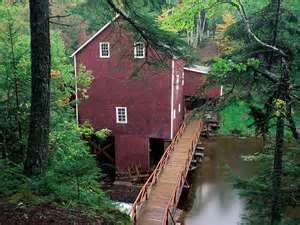
The property now operates as a museum within the Nova Scotia Museum family. The mill still produces selected products and walking trails have also been developed on a portion of the property.
Source: Nova Scotia Provincial Registry, Heritage Property Program, file no. 273.
Bulmer House
8740 Highway 2, Great Village
(Designated in 1997)
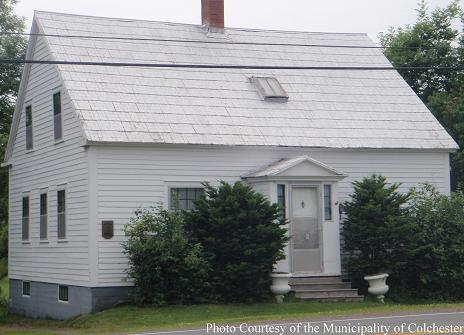 The Bulmer House is a simple one-and-one-half storey wood frame structure with wood clapboard, tin shingles and a symmetrical façade. The house is of a Classical Revival style in the vernacular form with a kitchen ell and a shed extension. It is a good example of this style of house once common in rural Nova Scotia. Built in the early to mid nineteenth century, the house is located in the heart of Great Village and the rear of the house overlooks the marshes and the Bay of Fundy. Both the house and the surrounding property are all included in the designation.
The Bulmer House is valued for its historical association with poet Elizabeth Bishop, a Pulitzer Prize recipient, whose work incorporated the imagery of the Great Village landscape, and the house itself. Bishop spent summers in Great Village along with living in the village for three years during her childhood. Of all Elizabeth Bishop’s prose pieces the best known and most analyzed is “In the Village,” agreed to be referencing Great Village. The community of Great Village, as well as the Bulmer House, appears repeatedly in the imagery of Bishop’s work.
Fraser Octagon House
63 Church Street, Tatamagouche
(Designated in 1993)
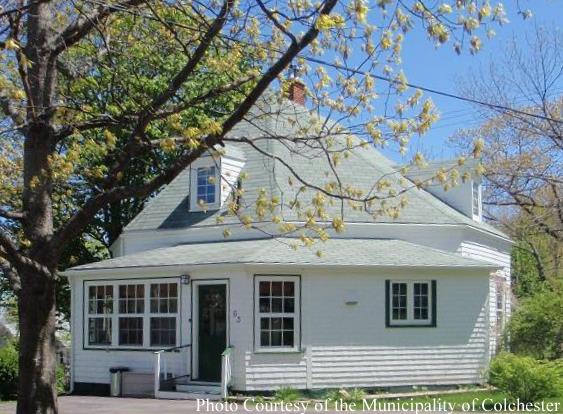 Built in 1857, the one-and-a-half story Fraser Octagon House sits on the corner of Church and Maple Street in Tatamagouche. Built to near octagonal plan form by James Talbot, this eight sided shape makes the house unique among domestic residences. The Octagonal plan form is based on the work of Orson S. Fowler.
Great Village School
8849 Highway 2, Great Village
(Designated in 1997)
 This school was built in 1903/04 and opened on November 8, 1904. It remains an active school within the heart of Great Village to this day. It was registered Provincially because of its unique architectural design. It has a Classical/Italianate style with a central frontispiece and louvred bell tower dividing the façade into three bays. Pallidian windows give the building an air of dignity and grace.
James Miller House
14 Back Road, Shubenacadie East
(Designated in 1997)
 Built in 1876 the James Miller House is located at 14 Back Road in Shubenacadie East, Nova Scotia. The Second Empire style, brick house sits adjacent to the main railroad line from Halifax. Its original owner, James Miller, owned a brick operation in Shubenacadie and used his home as advertisement for his business. Today the home is a testament to industrialization in Nova Scotia.
Layton’s General Store
8724 Highway 2, Great Village
(Designated in 1998)
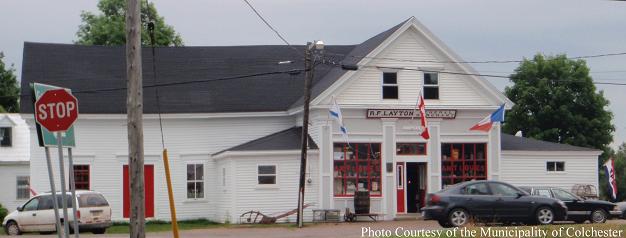 Layton’s General Store, located in Great Village was built in the 1860s and was opened in 1870 by Leander Carson Layton. The two smaller additions were added later. This store became the largest mercantile
 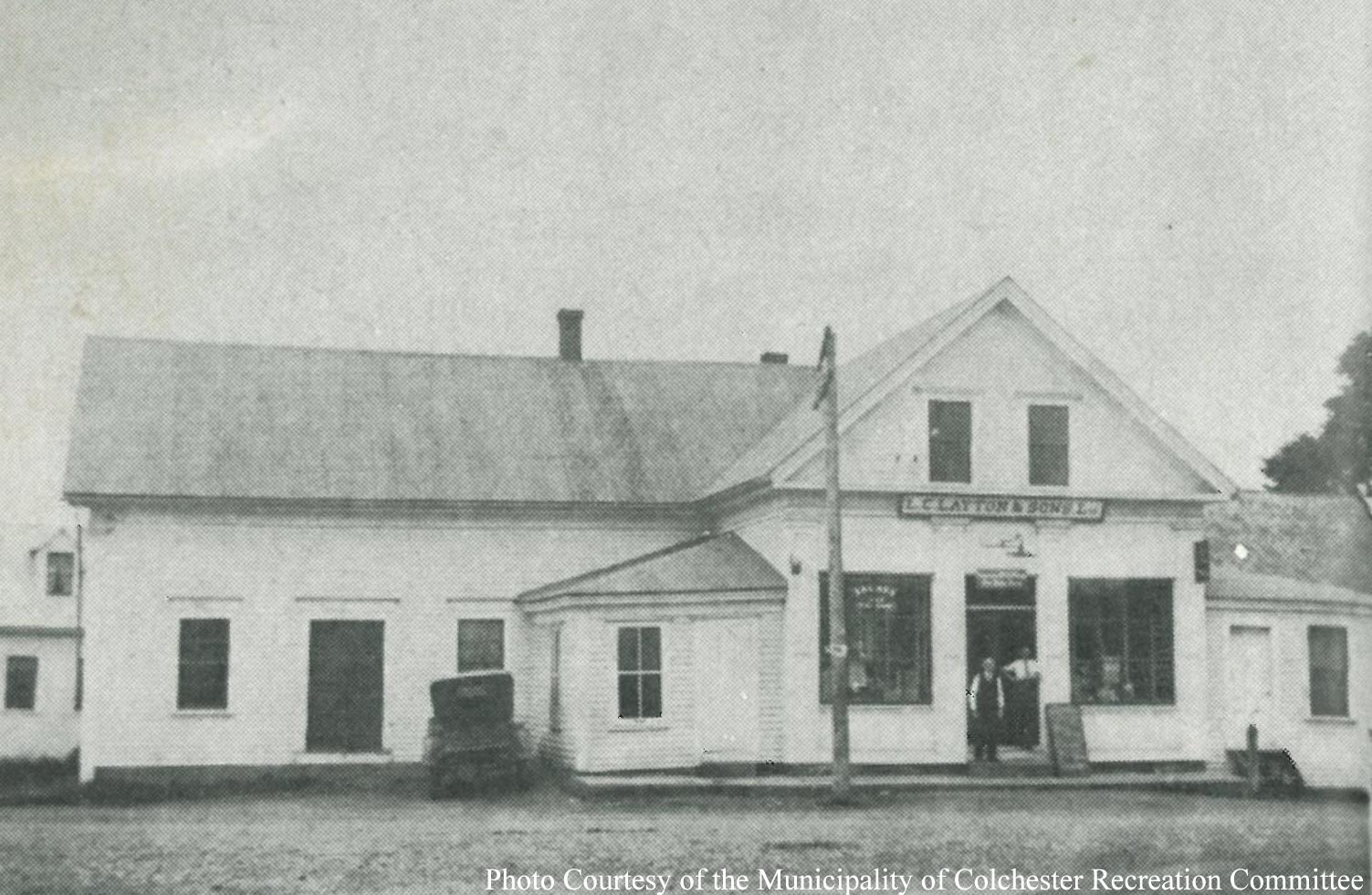 in Colchester County outside of Truro. It is now the oldest traditional general store that remains the province. The property was designated as a Provincial Heritage Site in 1989 and a National Heritage Site in 1992. The general store was operated until 1996 and is now Great Village Antiques, Nova Scotia’s Largest Antique Group Shop.
This building is considered overly Classical/Greek Revival in design with wide, moulded pilasters dividing the gable end storefront into three bays beneath a full triangular pediment. The store windows are each divided into twelve, vertically proportioned panes, with the lines of the panes continued below the window in moulded panels. The storefront is perfectly symmetrical except for a modern side-panel door which has replaced the original double door. Both the building and its surrounding property are included in the designation.
Lynwood
72 Queen Street, Tatamagouche
(Designated in 1993)
 The Lynwood” home is located on 3.65 acres of land in the Village overlooking Tatamagouche Bay. Construction of this house started shortly after Abraham Patterson bought the land in 1857. He was considered the father of the North Shore's copper mining industry, among other notable feats. His father, John Patterson, came from Paisley in Scotland, and was one of the Scottish emigrants who arrived on the Hector in 1773 and is recognized as the “Father of Pictou.” “The Lynwood” was named after his father’s house in Scotland.
The Margaret Fawcett Norrie Heritage Centre (located in Creamery Square)
39 Creamery Road, Tatamagouche
(Designated in 2016)
 The Centre became a Provincial Heritage Property on September 15, 2016. It has been designated because of its character defining elements of its former main creamery building and accessory building, including its large wood-framed two storey building, with two wood-framed side ells and a one-storey brick-clad rear portion; the complex roof including gambrels, hip and shed sections; its painted wood-shingle siding, painted “Barn Red”; its wide corner boards and trim and its distinctive signage depicting “TATAMAGOUCHE CREAMERY”, among other unique features.
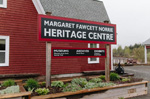 The Tatamagouche Creamery opening in 1925, and until it closed in 1992 was a major force in the community and surrounding area. In the 1940s, the production of Tatamagouche Butter ,“The Best Butter in the World ”, reached one million pounds. The cream was supplied by some 1,200 small dairy farms along the North Shore and its hinterland; from Pugwash in the west to River John in the east.* This building, which now combines several community museums, exhibits, collections and archives for the Northumberland Shore region, is part of Creamery Square, an historic waterfront development in the Village of Tatamagouche.
*Source: www.virtualmuseum.ca
Reverend James Smith Property
5305 Highway 289, Upper Stewiacke
(Designated in 1993)
 The Reverend James Smith Property is located at 5305 on the number 289 Highway, in Upper Stewiacke. The 1833 house has an uncommon exterior (Greek Revival style detailing) and is of architectural importance. The property’s owner, Reverend James Smith, was a Presbyterian Minister in the Stewiacke River valley for forty-one years. The property is valued for its connection to the Minister and architecture. This property is also known as the “Strathlorne Hotel” as Smith called the property Strathlorne after his ancestral home in Perthshire, Scotland.
St. James United Church
8729 Highway 2, Great Village
(Designated in 1995)
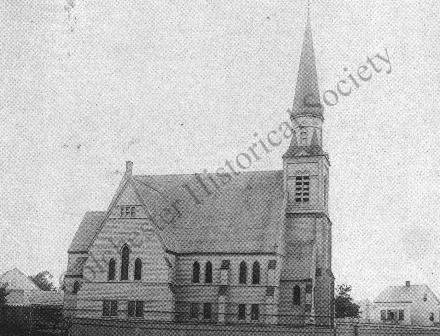 Located at the corner of Economy and Old Cumberland Roads,this Church is located in Great Village and was built in 1883. St. James United Church is valued for its association with Presbyterian history in old Londonderry Township, and because of the interpretation by its architect, the Nova Scotian born James Charles Dumaresq, of the Gothic Revival in a manner consistent with the style's origins and the Great Village setting. St. James was named in 1900 in Reverend James Maclean's honour, who ministered the congregation from 1876 to to his retirement that year. The church opened on January 6, 1884.
It was built in cross gable form with a monumental tower, buttressed corners, and lancet windows. The white clapboarded, wood framed building is a landmark which can be seen from most parts of the village. The most dominant architectural feature is the central tower and spire, rising to one hundred and twelve feet.
Sutherland Steam Mill
3169 Highway 326, Tatamagouche
(Designated in 2009)
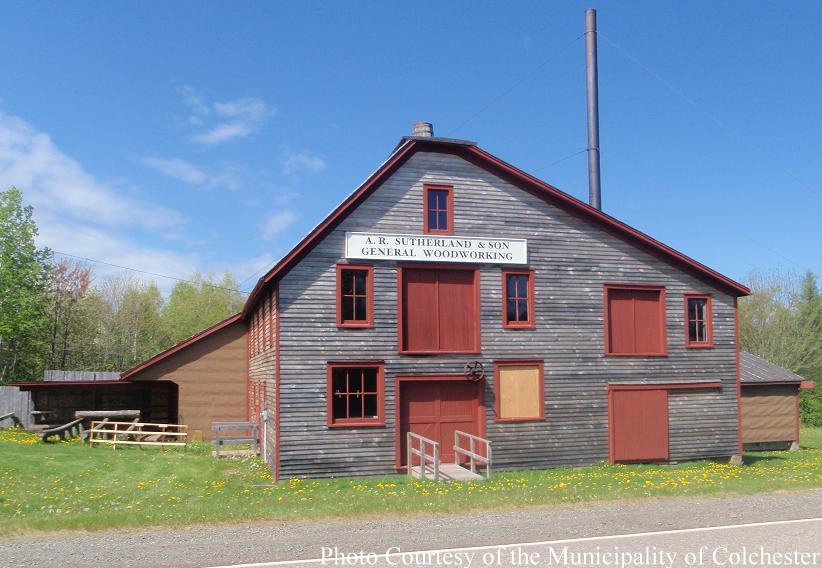 The Sutherland Steam Mill is valued for its tangible association with Nova Scotia’s industrial heritage; as one of only a few working nineteenth century steam mills; for its mainly intact and operating machinery; for its association with its builder and last owner; and as a museum.
The mill began as a steam-powered carriage factory, established by Alexander R. Sutherland, grandson of a Scottish immigrant. Sutherland was born in nearby West Branch and apprenticed as a carriage maker in the McKenzie Carriage Factory at West River. Circa 1891 he purchased land at Denmark, along side the newly constructed Pictou-Oxford Shortline. Here he set up a portable steam mill, protected by a make-shift building, awaiting the completion of a permanent building, and began producing lumber and carriages. Both the mill and structure were destroyed by fire and were replaced with the current building in 1894.
Sutherland quickly expanded and diversified the mill’s products. Like many rural mill owners, Sutherland processed feed grain for local farmers. For a time he was joined by his brother Thomas, who was a house builder, and the mill began producing sashes, doors and decorative pieces known as gingerbread, under the name Sutherland Bros. and Co. Many of the historic homes in the area were built using materials from the mill, including Sutherland’s, and remain extant.
At its busiest, the mill employed over a dozen men and boys, many of whom travelled a distance to work. A small bunkhouse and privy were erected on the site for them. The privy is no longer extant, however the bunkhouse remains.
Thomas Sutherland left the business around 1910 and Alexander operated solely until 1930 when his sixteen year old son, Wilfred, joined the business and the mill was renamed A.R. Sutherland and Son, General Woodworking. Alexander retired in 1940 and Wilfred continued the business as A.R. Sutherland and Company until 1958. In 1980 the Province of Nova Scotia purchased the site and following restoration of the building to its historic appearance, it was opened as a museum. Much of the machinery continues to function and the boiler, on occasion, is fired up for demonstrations.
Since its construction, the mill has undergone several changes and additions, mainly related to the incorporation of new machinery and product lines. The mill’s current appearance is much as it was at its closing, however its exterior colours have been returned to its turn of the twentieth century appearance. Most of the original and historic machinery remains and much of it was locally built, including engines built by Robb Engineering and several custom pieces built by the Sutherland brothers. The numerous pulleys, belts and shafting used to turn machines also remain.
Source: Provincial Heritage Property Program file no. 275.
Yuill Barn
3214 Highway 236, Old Barns
(Designated in 1985)

The Yuill Barn is located at 3214 on Highway Number 236 in Old Barns. The Yuill Barn is an Octagon shaped building constructed in 1886 by a farmer named Samuel James Kent. The design for the Yuill barn was based off the plans of Orson S. Fowler, whose designs were the basis for several octagonal shaped buildings in the Maritimes. In 1931, the property was bought by Amos J. Yuill and it stayed in his family until 2010 when the property was sold. This structure is the last octogonal barn remaining on it's orginal setting/footprint in Nova Scotia.
Debert Palaeo-Indian Site
Debert
The Debert Palaeo-Indian site is the oldest archeological site in the province. Artifacts found at this site date from 10, 600 to 13, 000. More than 5000 stone artifacts have been found here. The Debert site is the most northeasterly area to show Palaeo–Indian occupation and is one of only a few Palaeo-Indian sites discovered in a glaciated area. The site has been designated a “Special Place” by the provincial government through the Nova Scotia Museum under their Special Places Protection Act.
Colchester Heritage Sites
"In 1980, the government of Nova Scotia passed the Heritage Property Act in order to help identify, protect and rehabilitate built heritage of historic, architectural and cultural significance and to encourage the continued use of this resource." (nslegislature.ca)
Starting in 1997, the County of Colchester began designating Municipal Heritage Properties. Today, there are fourteen such properties within Colchester County.
Several other properties have been named Provincial Heritage Sites, such as the Balmoral Grist Mill and St. James United Church in Great Village. There are many other sites which have the potential to become Heritage Sites within the County.
- pdf General Information on Heritage Property Registration - Pamphlet(1.47 MB)
- pdf Heritage Application Form(282 KB)
- pdf Heritage Property By-law - Chapter 54(85 KB)
Since 1997, the Municipality of Colchester has designated 14 Municipal Heritage Properties within Colchester County:
Note: Click on the heritage property below to learn more
- Greenfield United Church of Canada
- Isgonish Marsh Burying Grounds Association
- Stewiacke valley Museum
- West New Annan United Church
- Springside United Church
- The J.M. Blaikie House
- Eastville Cemetery
- Eastville Schoolhouse
- Wilson Schoolhouse
- Intercolonial Railway Station (Train Station Inn)
- Five Islands Lighthouse
- Earltown Community Centre
- Sharon United Church
- Elizabeth Bishop House (aka Bulmer House)
- Willow Church Cemetery
Municipal Heritage Properties
Greenfield United Church of Canada
1578 Greenfield Road, Greenfield
Registration Date: January 30th, 1997 Erected in 1888 and dedicated in 1889, the church is more than 130 years old. This wood frame construction building was the only church in the community of Greenfield and was one of the original buildings in the community. It was established as a Union Church to serve both Presbyterians and Methodists on alternating Sundays, but became part of the United Church of Canada in 1925. The church closed in 2019 and was sold into private ownership. The Greenfield Cemetery associated with this church is located down the road.
Isgonish Marsh Burying Grounds Association
Marsh Road, Belmont
Registration Date: January 30th, 1997
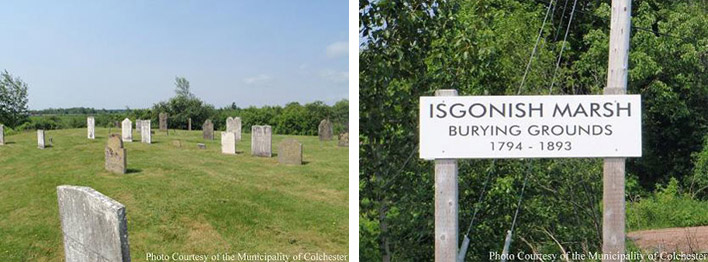 Isgonish Marsh is the site of the burying grounds of the first settlers in the district of the Londonderry Township. The gravestones on site date from the 1790s to the 1890s, making the burying grounds more than 210 years old. Approximately 35 people were buried on this property, however, it is thought that there are many more unmarked graves. The gravestones include family names still common in the community, such as Crowe, Barnhill, Wilson, Peppard and Graham. In 1987, the Isgonish Marsh Burying Grounds Association was formed to restore the site, which had become run down and overgrown.
Stewiacke Valley Museum
5445 Highway 289, Upper Stewiacke
Registration Date: January 30th, 1997
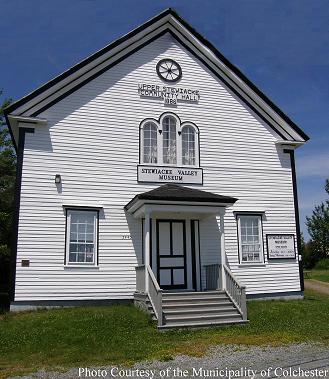 The museum was built with wood frame construction in 1886, making it one of the oldest in Upper Stewiacke. Originally used as a community hall up until the 1980s, the building has been used by the community frequently for the past 100 years.
West New Annan United Church
1128 Warwick Mountain Road, West New Annan
Registration Date: February 27th, 1997
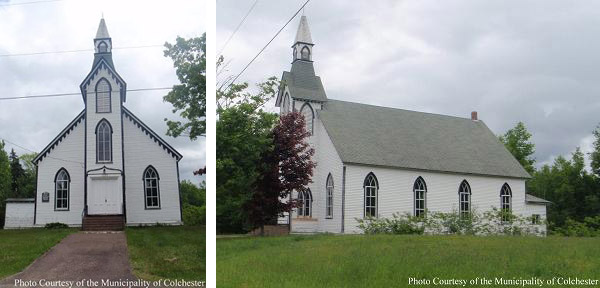 The church was designed by Robert Ward McCombie with Gothic type construction and built in 1890 by William Carruthers. Dedicated in February of 1891, the building was originally going to be a Presbyterian church. The church closed in December of 2011 and has found new life as a community-owned meeting place, now called the West New Annan Heritage House.
Springside United Church
7072 Highway 289, Eastville
Registration Date: January 30th, 1997
 Built in 1857 by John Crockett, the church opened in 1858 and was dedicated in February of 1859. The plans for the church were made by Rev. Dr. James Smith, who was a Presbyterian Minister in the Stewiacke Valley for 41 years. When the church closed on September 30, 2019, it was the oldest church building in the Stewiacke Valley and one of the oldest churches in the Truro Presbytery. The Springside Community Centre Association purchased the former church and adjoining hall in January of 2020, with the mandate to preserve the heritage buildings and expand on their community’s infrastructure by operating a free-standing community centre.
In 2025, the Springside Community Centre Association received a Heritage Award from the Colchester Historical Society, recognizing their ongoing contributions to the heritage of Colchester County.
Visit the Springside Community Centre Association on Facebook
The J.M. Blaikie House
8 Wharf Road, Great Village
Registration Date: January 27th, 2000

This 3 storey, 23 room Victorian house was built between 1867 and 1874 in Great Village. It has a wood frame construction and the features demonstrate details from Gothic and Queen Ann Revival periods. The exterior and interior of the house demonstrate the grand style of living in the Age of Sail in Great Village’s Heritage.
John M. Blaikie, the builder and original owner, was known for his involvement in ship building. A ship he had an interest in, the “John M. Blaikie,” was the first of only two four-masted schooners ever built in Canada. The works of German artisan Peter Gottschall adorn the walls and floors, as he lived there from 1936 to 1937. From 1957 to 1992, the house was used as a nursing home and today it is a bed & breakfast.
Eastville Cemetery
Highway 326, Eastville
Registration Date: September 28th, 2000
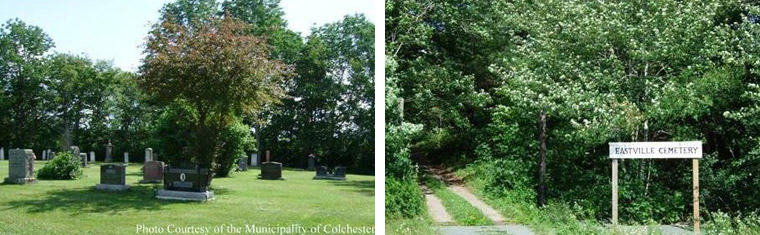 The cemetery was originally a family burial ground, on part of a farm belonging to Charles Cox, which began in 1856 in Upper Stewiacke. The nearest church to the cemetery is the Springfield United Church which is another registered Municipal Heritage Property. This former family burial ground has now evolved into a community cemetery.
Eastville Schoolhouse
18 Harrison Road, Eastville
Registration Date: September 25th, 2003

The schoolhouse was constructed in 1876 with a wood frame in “Classic Greek Revival,” an architectural style that became popular around 1830, and continued to be widely used into the first decade of the twentieth century.
Judging by a small exposed area of wall, the building appears to be post and beam construction, a framing technique that was commonly used for many types of buildings until the latter part of the nineteenth century. The school was moved 50 to 75 feet onto a concrete block foundation during the late 1940s, around the same time roads in the area were realigned.
The exterior of the building is original in all respects, including traditional cedar shingles, except for the steel roofing that replaced wooden shakes or shingles. For the interior, wall board has replaced either plaster or wood wall surfaces and a centrally located stove has been replaced with a modern heating system.
Grades one through 12 were taught at the Eastville School until 1950, when the South Colchester High School opened in Brookfield. Today, the school is used as a community hall.
Wilson Schoolhouse
909 Balmoral Road, Central New Annan
Registration Date: September 25th, 2003
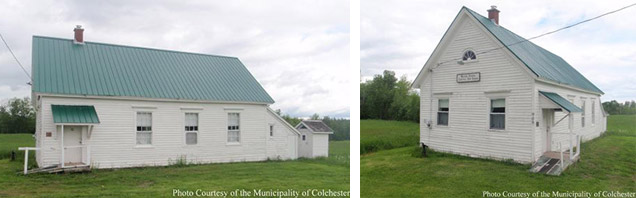
The wood frame schoolhouse was built in 1890 by George Kennedy and Robert Wilson and was named after David Wilson who leased the land out for one cent a year. The building is “Classic Greek Revival,” an architectural style that became popular around 1830, and continued to be widely used into the first decade of the twentieth century.
Grades one through 12 were taught at the Wilson School until 1950, when the North Colchester High School opened in Tatamagouche. Grades primary to six continued to be taught at the schoolhouse until 1966, when the school closed.
The area of Central New Annan is associated with Anna Swan Bates, Canada’s famed giantess who attended school in the area for ten years. A statue of Anna Bates, erected in 1977, now sits adjacent the Wilson school.
Intercolonial Railway Station (Train Station Inn)
21 Station Road, Tatamagouche
Registration Date: May 2006

The Intercolonial Railway constructed its "Short Line" from Oxford Junction to Stellarton through Tatamagouche in 1887. The ICR commissioned the Rhodes Curry Company of Amherst to build a passenger station in the village immediately east of the creamery. The ICR was merged into the Canadian National Railways in 1918, and CN operated this line as part of its "Oxford Subdivision," servicing mainly agricultural communities, as well as the salt mines at Malagash and Pugwash as well as a quarry in Wallace.
Passenger service through Tatamagouche was discontinued in the 1960s and the station was used as an office for railway employees handling freight until 1972, when it was closed, and sold in 1976. CN discontinued freight service on the line in 1986, when the Oxford Sub was abandoned; the rails were removed in 1989.
Today, the passenger station is a bed and breakfast with restored historic rail cars located on the property. The rail line through the village is a recreational trail, designated as part of the Trans Canada Trail and the point where the Nova Scotia portion of the trail branches south to Truro, Halifax and southwestern Nova Scotia.
Five Islands Lighthouse
140 Broderick Lane, Lower Five Islands
Registration Date: July 2013
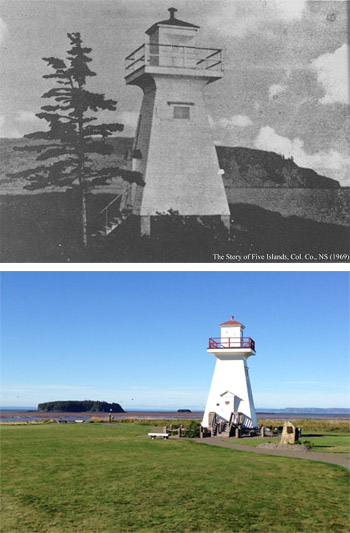
The lighthouse is a wooden structure, built on just over 2 acres of land at Sand Point in the winter of 1913/1914. The kerosene light was first lit in 1914, and around 1963 the oil lamp was removed and replaced with a battery-operated system. In 1967, when electricity arrived at Sand Point, the light was changed from white to red.
The Minas Basin has the highest tides in the world, and there is considerable erosion annually. The lighthouse was first moved back in 1952 and again five years later. It was placed as far inland as the property allowed and remained there until 1996. Nearly all the land had eroded, and the base of the lighthouse was washing away.
The lighthouse was deactivated in 1993, and the Five Islands Lighthouse Preservation Society was formed in 1996. The Municipality of Colchester purchased the lighthouse and moved it onto the property of Sand Point Beach Campground. The Society leased the lighthouse from the Municipality and the land from Sand Point Beach Campground.
On November 6, 2008, the lighthouse was moved on the back of a flatbed trailer from the campground to a new site on Broderick Lane, Lower Five Islands, about seven kilometres away. From the new site there is a wonderful panoramic view of the five islands after which the lighthouse is named.
On April 28, 2010, at the AGM of NSLPS, the Society was awarded the Craig Harding Lighthouse Preservation Award which is presented annually to recognize an organization or individual that has done outstanding work in saving lighthouses.
Acknowledgement: Contributor: Kathy Brown and the Five Islands Lighthouse Preservations Society. Sources: Five Islands Lighthouse Preservation Society; The Story of Five Islands, Five Islands Women's Institute, 1969; NSLPS Database.
Earltown Community Centre
5527 Highway 311, Earltown
Registration Date: October 30th, 2013

This former one-room rural schoolhouse was built in 1865, replacing the original log building, and was used to educate generations of children living in the Earltown area. It ceased to be a school in 1968 and continues to function as part of the core of community life in Earltown. The centre is owned and maintained by the Earltown Community Centre Society.
This modest building is valued for being a good example of a typical wooden clapboard, rectangular one-room schoolhouse and is in its original location. It has a medium-pitched gabled roof with prominent lintels over the front door and upper front window.
This building was probably based on standardized plans prepared by William R. Mulholland, a teacher at the Provincial Normal College in Truro, who was asked to prepare a set of plans in the 1860s in response to the need for some 760 new schoolhouses in Nova Scotia. Six different versions of easy to construct, single-storey, one and two room wooden structures were designed, all easy to heat and well ventilated.
The Earltown Community Centre was nominated in 2020 for a Heritage Award, offered by the Colchester Historical Society, recognizing their ongoing contributions to the heritage of Colchester County.
Sharon United Church
15 Church Street, Tatamagouche
Registration Date: October 27th, 2015
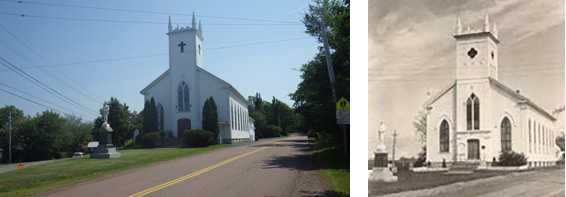
The church has a long history in Tatamagouche with construction taking place in 1854. The church bell, which is still being used, was donated by Miller Houghton & Company of Liverpool, England. A local ship builder, the Honourable Alexander Campbell, who had built several wooden sailing vessels for that firm, arranged for the donation of this bell. When the United Church of Canada was formed in 1925, the church was named Sharon United.
Design-wise, this wood-frame, Gothic Revival style church, is one of the most popular ecclesiastical styles in Nova Scotia throughout the second half of the nineteenth century. It has distinctive arched windows, narrow and pointed, which is a Gothic element. The most dominant architectural feature is the central tower with its four spires. A modern addition at the rear of the building reflects the style of the original building.
The church maintains a prominent role in the Tatamagouche area as a place of worship and as a gathering place for community events, whether they be spiritual, intellectual or cultural in nature. It is also valued for its physical, prominent position towards the western end of the village, welcoming all as they come into the village center.
Elizabeth Bishop House (aka Bulmer House)
8740 Highway 2, Great Village
Registration Date: June 14, 2018

Elizabeth Bishop was a Pulitzer Prize winning American poet and short story writer whose grandparents owned this house. It became the center of her universe as a child and later in life she wrote about this house and the Great Village landscape.
The house has a long history in Great Village with the original section of the home said to be around 220 years old and was originally located on Scrabble Hill, moved to its current location by her grandfather.
The house is of a Classical Revival style in the vernacular form, with two extensions, a kitchen ell and a shed. The entry porch, dormers and a skylight were added after its construction.
This property was designated in 1997 as a Provincially Registered Heritage Property, under the name “Bulmer House,” her maternal grandparents’ family name.
Visit the Elizabeth Bishop Society of Nova Scotia on Facebook
In 2019, the Great Village Preservation Society received a Heritage Award from the Colchester Historical Society, recognizing their ongoing contributions to the heritage of Colchester County.
More information can be found here: https://elizabethbishopcentenary.blogspot.com/2019/03/great-village-preservation-society.html.
Willow Church Cemetery
1778 Willow Church Road, Waugh’s River.
Registration Date: March 27th, 2024.
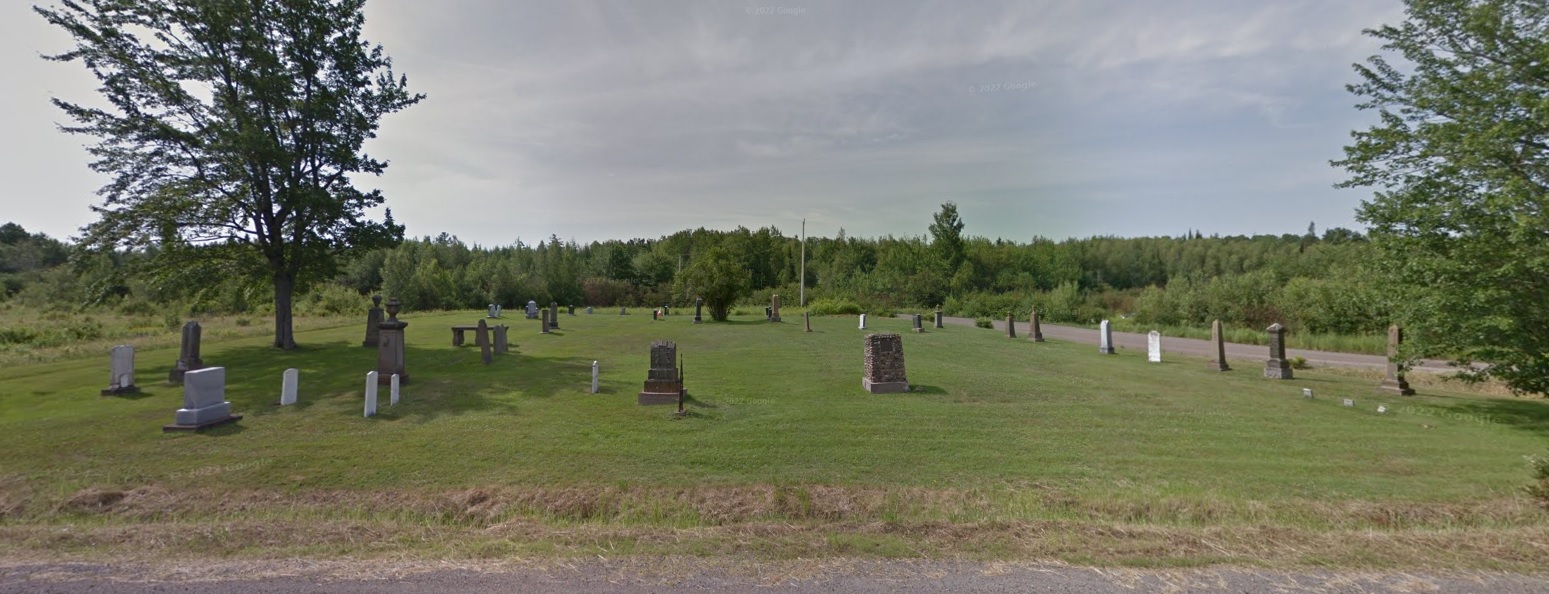
The Municipality of Colchester recognizes the significance the cemetery has to the rich history of both Tatamagouche and all of Colchester County. The cemetery is located at 1778 Willow Church Road in Waugh’s River and has been taken care of by the volunteer members of the Willow Church Cemetery Society for over 50 years.
The Willow Church Cemetery is one of the oldest known cemeteries on the North Shore of Nova Scotia and dates to the late 1700s. The oldest identifiable gravestone in the cemetery is dated 1795 and is a table stone, approximately 2 x 1 meters in size, with the name of Nelly (Henderson) Waugh, wife of Wellwood Waugh, inscribed on it. The Waugh’s arrived in the Tatamagouche area around 1781 from Scotland and Wellwood Waugh held many important positions during his life in Nova Scotia. He also played a prominent role in bringing other Scottish settlers to the area.
He and his sons built the first Willow Church on this property he donated as he saw the need for a place of worship, and it was the first Protestant church in North Colchester. It was destroyed by a gale in 1820 and they rebuilt but that church was destroyed by fire in 1935. The cemetery is all that remains. His name was inscribed on his wife’s table stone after his death in 1824. The community of Waugh’s River and the Waugh River are also reminders of his influence in the region.
A cairn was erected in the cemetery in 1971 by the Nova Scotia Museum to commemorate the first church built in the area, which was funded by the Willow Church Community. There are approximately 211 persons buried in the cemetery but not all have grave markers.
In 2024, the Willow Church Cemetery Society received a Heritage Award from the Colchester Historical Society, recognizing their ongoing contributions to the heritage of Colchester County.
More information can be found here: https://www.saltwire.com/atlantic-canada/celebrating-those-who-preserve-our-history-colchester-historeum-holds-annual-heritage-awards-ceremony-100966738